


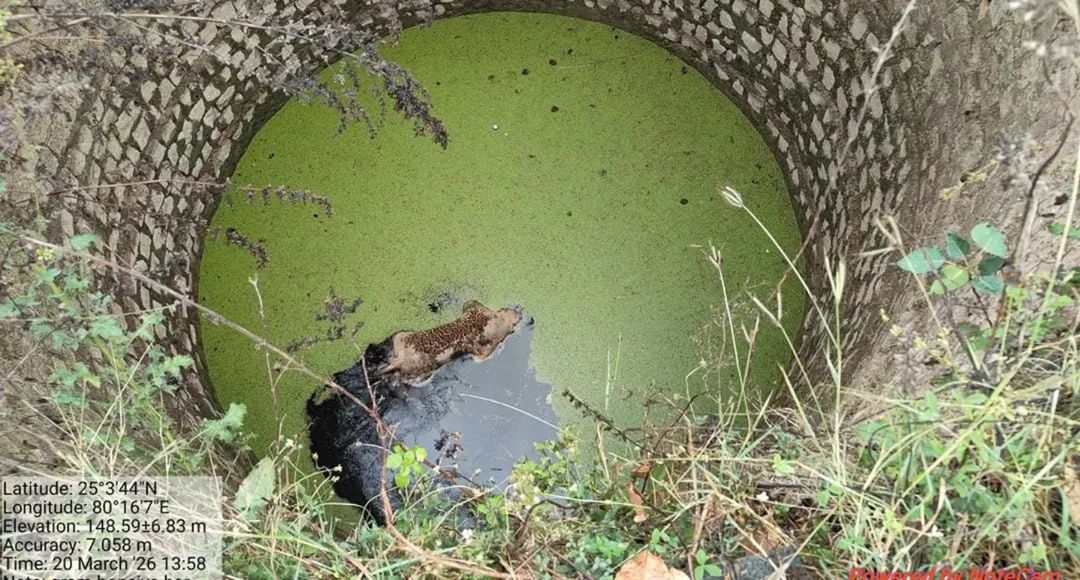
Leopard Found Dead in Well in Chhatarpur; Electrocution Suspected, One Arrested
Chhatarpur (Madhya Pradesh), March 21, 2026:
A leopard was found dead under suspicious circumstances in a well in Basia village under the Laukushnagar (Khajuraho) forest range of Chhatarpur district, raising serious concerns over illegal wildlife killings in the region.
Forest officials said the incident came to light on March 20, 2026, when information was received about a carcass lying inside a well in the Harrai beat area. A team from the Forest Department reached the site, secured the location, and initiated a preliminary investigation.
To strengthen the probe, a dog squad from the Panna Tiger Reserve was called in. A detailed search operation was carried out on March 21.
Initial findings indicate that the leopard was killed by electrocution using illegal electric wiring, a method increasingly reported in cases of human-wildlife conflict. The carcass was later dumped into the well to conceal evidence. Officials recovered electric wires and iron stakes from the site, believed to have been used in the crime.
One accused has been arrested in connection with the case. A forest offence case (No. 643/20, dated March 20, 2026) has been registered, and further investigation is underway under the supervision of the Sub-Divisional Forest Officer, Chhatarpur.
The post-mortem of the leopard was conducted by a veterinary expert, and the remains were disposed of as per official guidelines. Divisional Forest Officer Rishi Mishra confirmed the developments and stated that the involvement of additional individuals is being examined.
Rising Pattern of Wildlife Crimes
This incident is not isolated. Areas surrounding the Panna Tiger Reserve and adjoining forest divisions have witnessed repeated instances of wildlife entering human settlements due to shrinking habitats and prey scarcity.
Electrocution using illegal live wires—often meant to protect crops from wild animals—has emerged as a deadly and unlawful practice, frequently resulting in the deaths of protected species like leopards.
Legal Implications: A Serious Offence
Killing a leopard, which is listed under Schedule I of the Wildlife Protection Act, 1972, is considered a grave offence in India.
Offenders can face:
- Imprisonment up to 7 years
- Heavy financial penalties
- Seizure of equipment used in the crime
Despite strict laws, enforcement challenges and lack of awareness continue to contribute to such incidents.
Bigger Questions: Where Is the Gap?
- Why are illegal electric traps still so common?
- Is ground-level forest surveillance actually working?
- Are villagers being educated—or just punished after the fact?
If a large predator like a leopard can be killed, dumped in a well, and only discovered later, it exposes clear gaps in monitoring and rapid response systems.